

Designing a Calm, Inviting Bedroom: How Textiles and Decor Influence Sleep Quality
 Jeff "King of the Castle"
A bedroom is a multi-sensory space—what you touch, see, and feel while winding down all play a part in how well you actually sleep. Anyone who’s lived with a gorgeous-but-uncomfortable bed—or a cozy one that looks like a jumble sale—knows the tension between the two goals. The good news is that both are achievable at once, using a handful of principles borrowed from sleep science and interior design.
Understanding the Role of Bedding in Sleep Quality
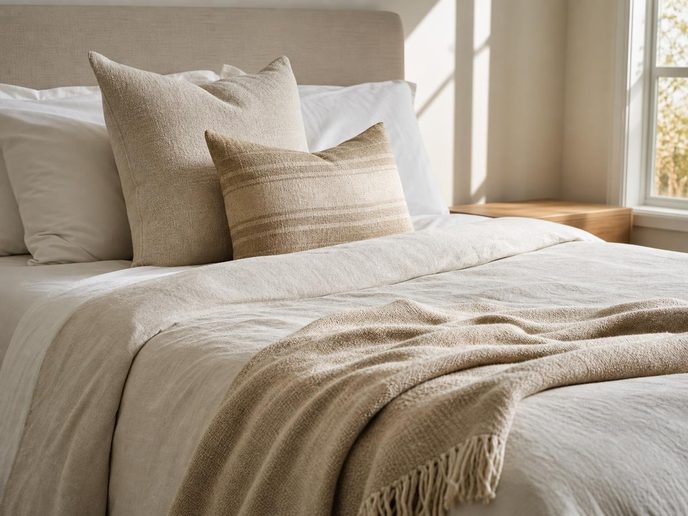
Thoughtfully placed decorative pillows and shams can pull a bed together visually without compromising the comfort of your everyday bedding. Sheets, duvet covers, and pillowcases have a direct hand in surface temperature, breathability, and how well moisture gets managed through the night. Fiber choice makes a real difference here: cotton and linen breathe easily, wool adapts to shifting temperatures across seasons, and synthetics run the gamut when it comes to wicking moisture away from skin. Purely decorative pieces like throws and shams are there mostly for looks, though their materials can still add to (or take away from) how warm a bed feels.
Key Takeaway: The right bedding materials do more than look nice—they help your body hold a stable temperature through the night, which supports better sleep.
Balancing Function and Aesthetics in Bedroom Design
Functional bedding—sheets, pillowcases, the pillows you actually sleep on—is built to handle nightly use and stay comfortable doing it. Decorative layers, on the other hand, including shams, bed runners, and accent pillows, are there mainly to look good. A practical approach is to keep breathable pillowcases on your sleeping pillows, then dress the bed with decorative pillows in shams during the day, clearing them off before you turn in. One misstep worth avoiding: piling on so many decorative pillows that the bed becomes a chore to use, or picking heavy fabrics that end up trapping heat.
Creating a Visually Calm Yet Inviting Bed
Color sets the mood of a room—soft neutrals, muted blues, and gentle greens tend to read as calming choices. Texture, meanwhile, adds depth without cluttering the eye; pairing crisp, smooth sheets with a slightly nubby throw is a simple way to create visual interest. Layering sheets, a duvet, a throw, and a modest number of accent pillows keeps the bed looking finished rather than overdone.
Here’s a simple way to test it: start with just your sleeping pillows and duvet, then add no more than two decorative pillows in shams and see how the look shifts.
- Minimalist: solid colors, one throw, a handful of pillows at most.
- Classic: coordinated patterns, a symmetrical pillow arrangement.
- Boho-inspired: mixed textures, pillows of varied shapes.
When it comes to layering decorative elements, less genuinely tends to be more.
Choosing Textiles That Support Both Design and Sleep
Bedding fabrics commonly include cotton, linen, bamboo-derived viscose, wool, and various synthetic blends, each bringing its own trade-offs in breathability and upkeep. Decorative pieces sometimes lean on heavier or more textured fabrics that look striking on display but aren’t necessarily pleasant against skin. As a rule, save the comfort-focused fabrics for anything that touches you at night, and let decorative textiles do their job purely for show. Percale weaves feel crisp and cool, while sateen leans smoother and slightly warmer—and thread count, despite its marketing appeal, matters far less than the quality of the fiber itself.
Practical Tip: Stick to breathable, easy-care fabrics for items you wash often, like sheets and pillowcases, and save more delicate materials for decorative touches such as accent pillows or shams.
Organizing the Bedroom for Restful Use
How organized a room feels has a lot to do with how calm it actually is. Fewer visual distractions, clear pathways, and a bed that’s actually made all help set the stage for winding down. It helps to designate a specific spot for decorative pillows at night and to keep the surfaces around the bed clutter-free. A simple nightly routine might look like this:
- Remove decorative pillows and shams.
- Fluff and arrange the sleeping pillows.
- Smooth out the sheets and duvet.
Repeating the same routine night after night sends a quiet signal to your body that it’s time to settle down.
Bringing It All Together: Designing Your Own Restful Bedroom
A truly restful bedroom pairs comfortable, functional bedding with decorative touches that know when to hold back. Color, texture, and decorative pillows should complement each other rather than compete, all in service of better rest. Start with the essentials—materials and temperature control—before turning your attention to decorative details that suit your taste. Take stock of your current setup, pick one or two changes to try, and pay attention to how they affect your mood and sleep over time. No single bedding choice will guarantee a perfect night’s sleep, but a little thoughtful planning goes a long way toward creating a space that actually supports it.