
Beyond Paint: What Wall Finishes Actually Contribute to a Space — And How to Choose the Right One
 Jeff "King of the Castle"
Walk into a room that has been finished well, and something registers before the conscious mind has identified what it is. The walls aren’t just a backdrop. They have presence, texture, depth and a surface quality that interacts with the light in the room and the materials around it in ways that flat paint simply doesn’t produce. Wall finishes sit at the intersection of the technical and the aesthetic in a way that few other elements of an interior do, and the decision about which finish to specify — for a villa in Dubai, a hotel corridor in Doha, a restaurant interior in Abu Dhabi — shapes everything that comes after it in ways that are difficult to reverse once the finish is applied. Understanding what the main categories of wall finishes contribute, technically and aesthetically, and what makes each one the right or wrong choice for a specific project is where a well-specified interior begins.
What Flat Paint Contributes — And What It Doesn’t
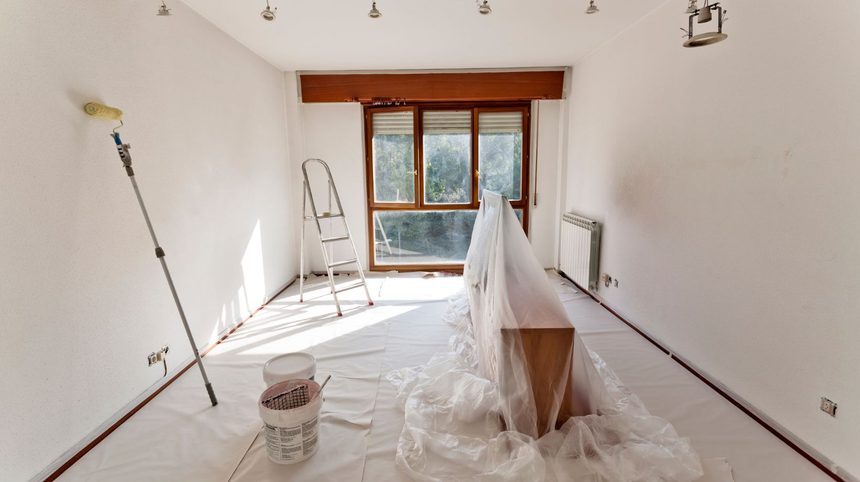
Flat paint is not a bad wall finish choice. It is a specific wall-finish choice with particular characteristics that serves certain projects well and others less well. Understanding its limitations is the starting point for understanding why other finishes exist.
Flat paint produces a uniform, matte surface. Light hits it and stops there rather than bouncing back into the room. In spaces where the wall is meant to recede — a gallery, a bedroom, a quiet residential sitting room — that quality is exactly what’s needed. The wall steps back. Everything else comes forward.
Flat paint offers a space nothing beyond its colour. No depth. No texture. No material quality that the eye or the hand registers. In residential contexts where the wall is genuinely meant to recede, that’s acceptable. In commercial contexts, or anywhere the Gulf climate creates moisture and temperature demands, it tends to show its limitations sooner than finishes designed with greater inherent durability in mind.
Microcement and Microtopping: Seamless, Textural, Architectural
Microcement and microtopping finishes produce a continuous, seamless surface with a fine texture that reads differently across different lighting conditions. Applied correctly, they create walls with depth and variation that flat paint lacks — a surface that catches light at different angles and produces a visual complexity that is genuinely architectural rather than decorative.
The technical characteristics of these finishes make them particularly well-suited to the Gulf market. Applied at 2 to 3mm thickness over prepared substrates, they are compatible with concrete, plaster, brick, and existing tile — which gives them flexibility across new-build and renovation contexts. They are water-resistant, which matters in bathrooms, kitchens, pool surrounds, and any interior with moisture exposure. And the seamless application means no grout lines, no joints, no gaps where moisture, bacteria, or cleaning products can penetrate.
For hotels, restaurants, and high-end residential projects where the wall surface needs to be both visually refined and functionally robust — where the finish will be cleaned regularly, exposed to significant foot traffic, and expected to maintain its appearance over years rather than months — microtopping offers a specification that flat paint doesn’t.
What gives microtopping genuine design flexibility is how much the same material can vary depending on its application and finish. A polished, burnished surface reads as refined luxury. A coarser, more heavily textured application reads as raw and industrial. Both come from the same base material. The difference lies entirely in the applicator’s hands and in the decisions made during finishing.
Venetian Plaster and Lime-Based Finishes: Depth, History, and Craft
Venetian plaster and lime-based finishes occupy different territory from microtopping. The surface quality they produce is explicitly handmade — built up through multiple layers of material, applied and burnished by hand, producing depth and variation that industrial processes can’t replicate. A well-applied Venetian plaster looks different from every angle and different again in different light. No two applications are the same because they can’t be.
The right context for this finish is one where individuality and craft are part of the brief rather than incidental to it. Luxury hotel suites. High-end residential projects where material richness matters. Restaurants where the atmosphere is part of what’s being sold. In these settings, the depth and variation of a well-applied Venetian plaster finish contribute something to the room that more uniform or contemporary finishes can’t replicate.
The technical dimension of these finishes requires careful consideration in the Gulf context. Lime-based materials are breathable, which can be an advantage in managing humidity in certain applications, but they require correctly prepared substrates and — critically — skilled application by craftsmen who understand the material. A Venetian plaster applied incorrectly doesn’t simply look less impressive than an excellent one. It fails in ways that are expensive to remediate, which places the applicator’s quality at the centre of the specification decision in a way that more forgiving finishes don’t.
Textured and Structural Finishes: Creating Surface Without Pattern
Textured wall finishes create visual and tactile interest by manipulating the surface material rather than through colour or reflectivity. Sand finishes, aggregate finishes, skip trowel applications, and proprietary textured coating systems each create a different quality of surface relief that interacts with light in ways that smooth finishes don’t.
Two practical advantages make textured finishes worth considering in the Gulf market, beyond aesthetics. The first is substrate tolerance. A textured surface accommodates minor imperfections that would show clearly under a flat or polished finish — relevant in large commercial projects where perfect wall uniformity at scale is rarely achievable. The second is acoustics. Certain textured finishes reduce sound reflection, which is worth factoring into specifications for hospitality and commercial spaces where the acoustic environment is part of the brief.
The design consideration with textured finishes is scale. A finish with significant surface relief works differently in a large hotel lobby than in a residential bedroom. The texture that reads as rich and architectural in a large, double-height space can feel heavy or busy in a smaller, more intimate room. Matching the scale and weight of the finish to the scale and use of the space is where the judgment in the specification matters most.
Metallic and Effect Finishes: Reflectivity as a Design Tool
A metallic or effect wall finish is not a fixed surface. It reads differently in natural light than in artificial light. Differently at midday than in the evening. Different from a direct sightline than from an angle. Reflective particles and pearlescent pigments are what produce this responsiveness, and it’s what separates these finishes from surfaces that simply sit there regardless of the light around them.
This dynamic quality makes metallic and effect finishes particularly relevant in hospitality contexts, where lighting design is sophisticated and the atmosphere of a space is expected to shift throughout the day and across dining or social occasions. A restaurant where the wall finish contributes to the evening atmosphere differently from the lunchtime one is a restaurant where the finish is doing design work that flat paint or even microtopping can’t replicate in the same way.
The technical consideration with these finishes is their relationship with the lighting specification. A metallic finish in a space with poorly designed or positioned light sources can produce reflections that are distracting or unflattering rather than atmospheric. The wall finish and the lighting need to be considered together, so the specification decision is best made in collaboration with the lighting designer rather than independently.
Choosing the Right Finish for the Project
The finish that is right for a specific project is determined by the intersection of several variables, each of which needs to be assessed honestly before the specification is made:
- The use of the space: commercial or residential, high-traffic or intimate, public-facing or private
- The moisture and humidity exposure: bathrooms, pool areas, kitchens, and exterior-adjacent spaces all create demands that not every finish meets
- The substrate condition: the quality and uniformity of the surface to be finished affect which finishes are viable without additional preparation
- The lighting design: how the space is lit determines which finish characteristics will be visible and which will be lost
- The maintenance expectation: how the surface will be cleaned, and how often, determines the durability specification the finish needs to meet
- The design intent: the overall material language of the interior and what the wall finish needs to contribute to it
A decorative paint Dubai specification that answers all of these questions honestly for each surface in a project, producing an interior where the wall finishes do real work. One that treats the wall finish decision as a late-stage colour selection produces something less.